
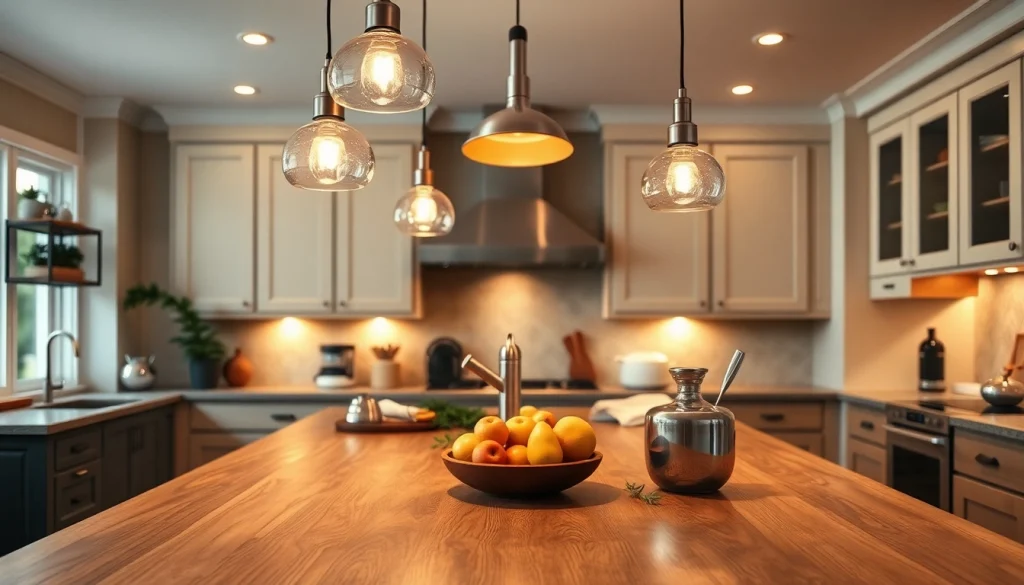
Understanding Island Lighting
What is Island Lighting?
Island lighting refers to the fixtures specifically designed to illuminate kitchen islands, providing functional and aesthetic enhancements to these central workspaces. Often featured in modern kitchens, they play a crucial role in ensuring that the surface is neither too dim nor overly bright, allowing for cooking, dining, and socializing in style. Optimal island lighting is not just about visibility; it’s about creating a dynamic atmosphere in the kitchen.
Importance of Island Lighting in Kitchen Design
Kitchen islands have evolved into multifunctional spaces where families and friends gather. Thus, island lighting serves an essential role in kitchen design, as it enhances the overall functionality and aesthetic appeal. Good island lighting can elevate the mood, create a sense of warmth, and even define the kitchen layout. With the right lighting, kitchens can transform into welcoming spaces that reflect personal style and meet practical needs. If done correctly, island lighting can accentuate architectural features and color palettes, playing a pivotal role in unifying the design of the entire kitchen.
Types of Island Lighting Fixtures
There are several types of fixtures to consider when choosing island lighting:
- Pendant Lights: These are the most common choice for island lighting, offering both style and focused illumination directly over the workspace.
- Chandeliers: For a more dramatic effect, chandeliers can provide both ambient and task lighting while acting as a statement piece.
Choosing the Right Island Lighting Style
Modern vs. Traditional Island Lighting
The choice between modern and traditional lighting hinges on personal style and kitchen aesthetics. Modern island lighting often features sleek lines, geometric shapes, and minimalist designs, utilizing material like metal and glass. It complements contemporary kitchens with a focus on efficiency and simplicity. In contrast, traditional island lighting incorporates classic designs with ornate details, often using materials like bronze, brass, or wood, perfect for rustic or farmhouse-style kitchens.
Mixing Island Lighting with Other Fixtures
Creating harmony among lighting fixtures elevates the overall kitchen design. Mixing island lighting with other types, like recessed lights or wall sconces, can create layers of light that enhance ambiance. The key is selecting fixtures that share a common style, finish, or color to maintain a cohesive look. This approach prevents clashing and draws attention to various spaces within the kitchen.
Color and Material Considerations for Island Lighting
Color and material significantly impact the visibility and aesthetic appeal of lighting fixtures. Popular materials for island lighting include glass, metal, and wood, each offering unique textures and reflections. The color choices should either complement the existing palette or provide a contrast that draws the eye. For instance, warm tones can create an inviting atmosphere, whereas cooler hues might offer a more modern appeal. Furthermore, the finish of the fixtures—be it matte, glossy, or brushed—can enhance or soften the overall kitchen vibe.
Installing Island Lighting Safely
Planning the Installation Process
Before installation, careful planning is essential to ensure both safety and aesthetic satisfaction. Begin by measuring the kitchen island and determining the optimal location for fixtures based on the kitchen layout. It’s recommended that the lighting be approximately 30-36 inches above the countertop for adequate illumination. Always turn off power at the circuit breaker before starting any installation process to safety. Consulting a professional electrician can also ensure adherence to local codes and regulations.
Common Mistakes to Avoid
Several typical mistakes can undermine the effectiveness of island lighting:
- Inadequate lighting: Overestimating the brightness needed can lead to a poorly lit island.
- Poor placement: Fixtures positioned too high or too low disrupt both function and aesthetic.
- Ignoring scale: Larger islands need bigger, more numerous fixtures to achieve balance.
- Overloading circuits: Ensure the existing wiring can handle the new fixture’s wattage to avoid electrical issues.
Tools Needed for Installation
For a successful installation of island lighting, certain tools are essential:
- Screwdriver (both flat-head and Phillips)
- Wire stripper
- Voltage tester
- Pliers
- Drill with bits suitable for your ceiling type
- Level to ensure fixtures are hung evenly
Enhancing Functionality with Island Lighting
Layered Lighting Techniques
Layered lighting incorporates three essential types: ambient, task, and accent lighting. Combining these ensures ample illumination while creating an inviting ambiance. For instance, bright pendant lights can serve as task lighting over the island, while recessed lights provide ambient light to fill the entire kitchen. Accent lighting can highlight wall art or decorative pieces nearby, elevating the visual interest throughout the kitchen.
Dimmer Switches for Customization
Installing dimmer switches allows homeowners to customize lighting levels based on the occasion. Whether hosting dinner parties or enjoying a quiet meal, adjusting the brightness can significantly alter the mood. Dimmer switches also help in energy conservation, allowing for lower electricity usage without sacrificing functionality.
Task Lighting vs. Ambient Lighting in Island Lighting
Understanding the difference between task and ambient lighting plays a crucial role in effective island lighting design. Task lighting focuses on illuminating specific areas for practical tasks like cooking or prepping, while ambient lighting provides a general light source that fills the room. A well-designed island lighting scheme should successfully balance both types, delivering both functionality and comfort.
Maintenance and Care for Island Lighting Fixtures
Cleaning Tips for Different Materials
Different materials require specific cleaning techniques to maintain their appearance:
- Glass: Use a soft cloth and glass cleaner to prevent scratches.
- Metal: Warm, soapy water can effectively remove tarnish; avoid abrasive cleaners.
- Wood: A damp cloth followed by a dry one preserves the finish; avoid soaking.
When to Replace Your Island Lighting
Knowing when to replace your island lighting is important for ensuring optimal performance. Signs include flickering, buzzing sounds, or inconsistent light quality. If fixtures are more than ten years old, it may be time to consider an upgrade for energy efficiency and aesthetic reasons.
Updating Island Lighting for Seasonal Changes
Adjusting your lighting for seasonal changes can refresh the kitchen’s look and feel. Consider swapping lamp shades, changing bulbs to warmer or cooler tones, or adding decorative accessories that reflect the season. This keeps the environment dynamic and engaging throughout the year.
Frequently Asked Questions
What size should island lighting fixtures be?
Choose fixtures proportional to your island; generally, 30-36 inches above the island enhances usability and style.
How many fixtures do I need for my island lighting?
Typically, one or two well-placed fixtures suffice, depending on the island’s size and the fixture’s style. Consider brightness and aesthetic balance.
Can I use different styles of lighting in the kitchen?
Yes! Mixing styles can create visual interest; select pieces that harmonize together for balance in design. Ensure they spatially complement each other.
Are pendant lights good for island lighting?
Pendant lights are popular for island lighting as they offer focused illumination and can enhance overall kitchen aesthetics through various designs.
What types of bulbs work best for island lighting?
LED bulbs are the most energy-efficient choice and offer flexible color temperatures, making them ideal for achieving desired lighting effects on islands.