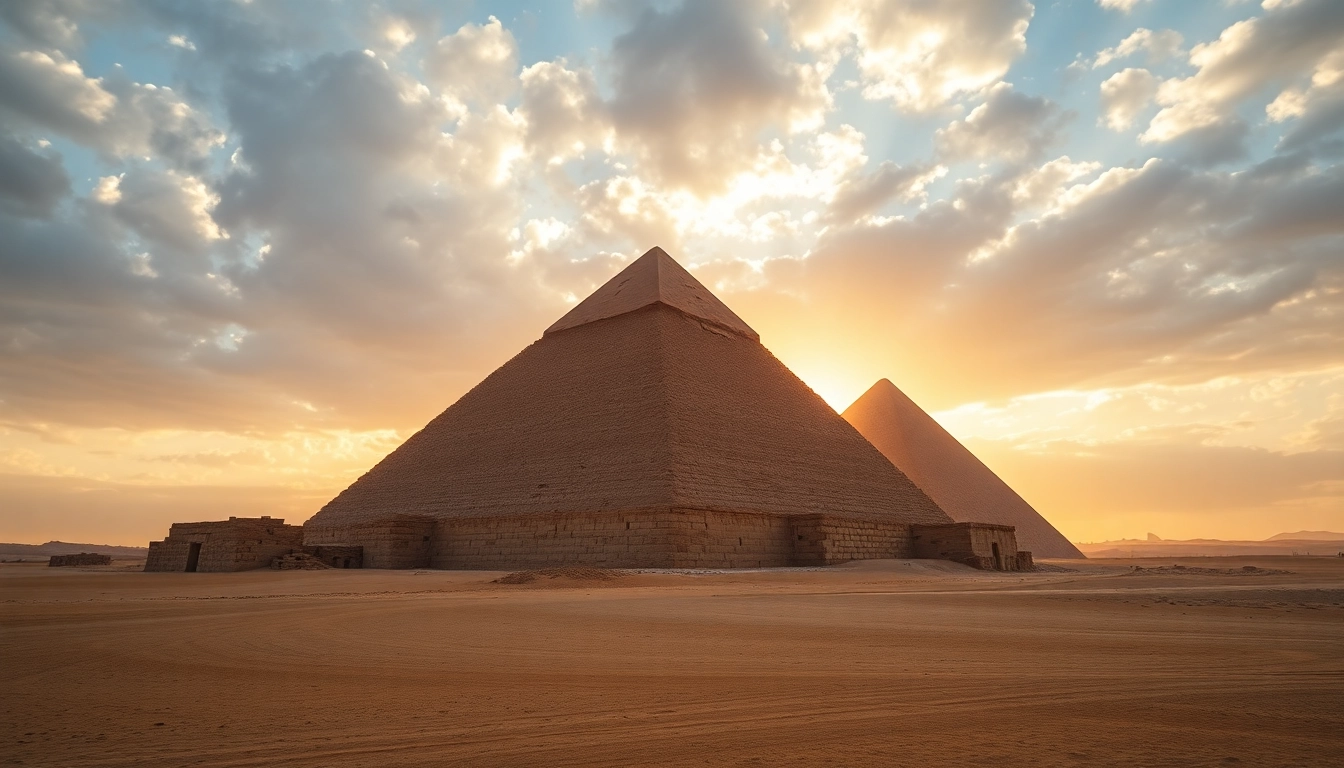
The Fascinating History of Piraminds
Throughout human history, few structures have captivated the imagination as deeply as piraminds. These monumental edifices, primarily found in Egypt, serve as remarkable testaments to the ancient civilization that once thrived along the banks of the Nile. In this exploration, we will delve into the rich history surrounding piraminds, revealing their significance and the enigmatic forces that shaped their existence.
An Overview of Ancient Egyptian Civilization
To appreciate the piraminds, one must first understand the grandeur of ancient Egyptian civilization. Flourishing for over three millennia, from around 3150 BCE to 30 BCE, this civilization was marked by remarkable advancements in art, architecture, governance, and spirituality. The Egyptians believed in a complex afterlife, which influenced many of their cultural practices and monumental constructions. Central to this belief system was the idea that pharaohs, as divine rulers, would ascend to the heavens ever after their earthly demise, necessitating the creation of grand tombs—piraminds.
Historical Significance of Piraminds
Piraminds served multiple purposes beyond serving as tombs for pharaohs. They symbolized the embodiment of royal power, the centralization of authority, and the religious belief in life after death. Not merely structured tombs, they represented the very connection between the earth and the divine. The meticulous planning and resources allocated to building piraminds underscore their foundational role in ancient Egyptian culture, reflecting a society committed to the afterlife and the veneration of its rulers.
The Legacy of Pharaohs Associated with the Piraminds
The most famous piraminds—the Great Pyramid of Giza, the Pyramid of Khafre, and the Pyramid of Menkaure—are monumental tombs that encapsulate the legacy of their respective pharaohs. Each structure was carefully constructed to honor the pharaoh’s greatness in life and secure their place in the afterlife. The grandeur and precision of these constructions reflect not only the skills of ancient craftsmen but also the sustained efforts of thousands of laborers.
Architectural Mastery: How Piraminds Were Built
The construction of piraminds remains one of the most intriguing aspects of ancient architecture. The techniques employed to erect these colossal structures highlight extraordinary innovation and ingenuity.
Innovative Construction Techniques
The methods used in piramid construction varied, but many scholars agree on a few common techniques. One prominent theory suggests that the ancient Egyptians utilized ramps, possibly straight or spiral, to transport massive limestone and granite blocks to higher elevations. Romer ramps comprised of mudbrick or limestone rubble allowed laborers to haul stones effortlessly using sledges. Recent archaeological discoveries further support this theory by uncovering remnants of construction sites, showing how these ancient builders organized labor and resources.
The Role of Labor in Piramid Construction
The assembly of piraminds required a vast workforce, commonly misunderstood as being merely slaves. In reality, many of the laborers were skilled workers commissioned during the Nile's annual flooding when agriculture came to a standstill. These workers lived in nearby labor camps, receiving food, medical care, and housing in return for their efforts in building the piraminds. This cooperation reflected social unity and dedication to the common goal of honoring the pharaoh.
Materials Used in Building Piraminds
Primarily built from limestone, granite, and basalt, the choice of materials plays an essential role in the durability and resilience of piraminds. The core structure often consisted of local limestone, while the outer layer was generally polished Tura limestone to create an iconic smooth surface. The use of granite, quarried from Aswan, for the internal chambers showcased the engineering prowess of the Egyptians. These materials not only reinforced the structure's integrity but also projected the pharaoh's wealth and power, embodying the principle of "lasting forever."
Exploring the Structure of Notable Piraminds
Among the numerous piraminds in Egypt, a few stand out due to their size, architectural brilliance, and historical relevance. Here, we delve into their unique structures and features.
The Great Pyramid of Giza
The Great Pyramid, built for Pharaoh Khufu, stands as the largest and oldest of the three main piraminds in Giza. Originally standing at 146.6 meters, it was the tallest man-made structure in the world for over 3,800 years. Its sophisticated design includes an elaborate internal layout with ascending and descending passages, chambers, and hidden voids yet to be fully explored. The Great Pyramid's grandeur and precision remain a marvel, reinforcing the ancient Egyptians' architectural capabilities.
The Pyramid of Khafre
Khafre's pyramid is the second largest, originally reaching 136.4 meters in height. Uniquely, Khafre's site includes the iconic Great Sphinx, often seen as a guardian of the necropolis. The pyramid's design closely resembles that of its predecessor but incorporates deeper tomb chambers and a more complex network of passages, showcasing the evolution of architectural techniques over time.
The Red Pyramid: Insights and Features
Built for Pharaoh Snefru, the Red Pyramid is known as the first successful true pyramid and exhibits a smooth-sided construction. Its unique red limestone gives the pyramid its name and a distinct appearance. The architectural progression visible in the Red Pyramid offers valuable insights into the evolution of piramid design, including hints of the experimentation involved in the transition from step-sided to smooth-sided structures.
Cultural Impact of Piraminds on Modern Society
The influence of piraminds extends far beyond their historical context. To this day, they inspire art, literature, and tourism.
Piraminds in Art and Literature
Piraminds have fascinated creative minds across generations. In literature, they symbolize mystery, ambition, and the afterlife, inspiring countless novels, poems, and films. Artists often incorporate piraminds into their works, reflecting their storied past and the mysteries they represent. Their significance as emblematic structures transcends time, while their majestic form continues to evoke a sense of awe in artistic expression.
Tourism and Economic Importance
The piramids attract millions of tourists annually, serving as central pieces of Egypt's economy. From guided tours to educational programs, the piramids are not just relics of the past but vibrant hubs of cultural exchange and tourism-based revenue. Their architectural marvel generates discussions, fostering appreciation for ancient brilliance while making substantial contributions to local economies.
Modern Archaeological Discoveries Related to Piraminds
Recent archaeological advancements continue to unearth new information about piraminds. Innovative technologies like ground-penetrating radar have revealed hidden chambers and tunnels, prompting further exploration. Discoveries of ancient tools, worker settlements, and burial practices challenge conventional understandings, providing fresh insights into the lives of those who constructed these monumental structures.
Frequently Asked Questions About Piraminds
1. What are piraminds made of?
Piraminds are primarily constructed from limestone and granite, which were quarried and carefully transported. The inner chambers often contain granite, while the outer casing features polished Tura limestone.
2. How were piraminds aligned with the stars?
Ancient Egyptians aligned piraminds using celestial navigation techniques. They made precise astronomical observations to ensure that the structures aimed at significant stars or constellations.
3. Why were piraminds built?
Piraminds served as monumental tombs for pharaohs, symbolizing their journey to the afterlife and demonstrating their power. They were designed to ensure safe passage in the afterlife.
4. How many piraminds exist in Egypt?
Egypt is home to over 100 piraminds. The most famous are located in Giza, including the Great Pyramid, which is one of the Seven Wonders of the Ancient World.
5. What mysteries surround the construction of the piraminds?
The construction methods and workforce used to build piraminds have intrigued historians and archaeologists. Ongoing research seeks to uncover the logistics and techniques utilized by the ancient Egyptians.