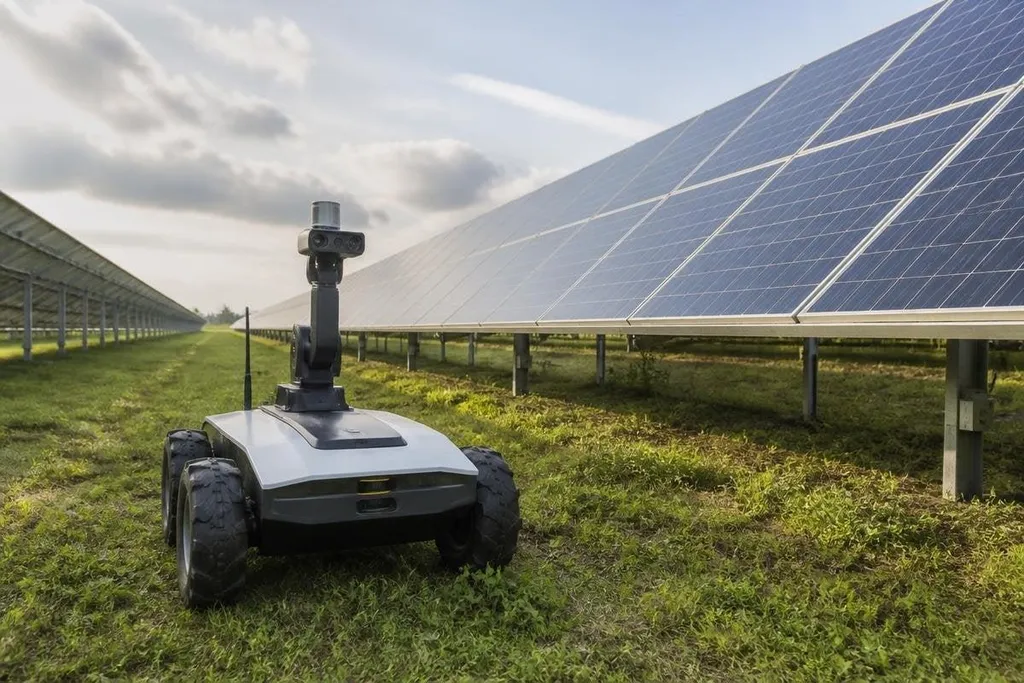
A solar farm can cover many hectares with panels that need regular checks, cleaning, and vegetation control. The next wave of robots will be judged by how much field work they finish without stopping for a human operator.
- Inspection robots can spot damaged panels from images and sensor readings.
- Cleaning and mowing machines must work around fragile equipment and uneven ground.
- The hardest test will be useful work across a full site, not a short trade-show demo.
Inspection comes first
Inspection is the clearest job for autonomous systems. A robot can travel along panel rows, take images, record its position, and flag areas for a technician to check.
That process could help a site team find cracked glass, loose parts, dirt, or unusual heat patterns before a small fault affects a larger section. The robot does not need to repair the panel to save time.
It needs to produce records that a person can trust and act on. The useful system will connect each image to a panel location. A report that says “fault found” is weak if a technician still has to search a large site.
A report tied to a row, panel, and inspection date gives the team a clear next step. Cameras will handle much of this work, while thermal sensors can show heat differences that ordinary images miss. The hard part is telling a real fault from shade, dust, glare, or a changing sky. That calls for careful software checks and a human review step when the result is uncertain.
Cleaning and vegetation control
Dirt reduces the light that reaches a panel, while grass and other plants can block access, shade lower panels, or create fire risks. Robots built for these jobs will need to move close to panels without scratching surfaces, cutting cables, or striking support frames.
A cleaning robot may use brushes, air, water, or a dry surface tool. Each method brings a cost. Water needs storage and transport, brushes can wear, and air may move dust without removing it. A site operator will compare the cleaning result with the time and equipment needed for each pass.
Mowing brings a different problem. The robot must detect posts, cables, fences, drainage changes, and people. Its route also needs to leave enough room for service vehicles and emergency access. A machine that cuts grass well but blocks site work has solved only one part of the job.
That gap between cutting grass and keeping a site usable is the question behind solar farm robotics coverage. The next problem is the field itself: open ground brings heat, dust, glare, slopes, and changing access.
The field is harder than the demo
Solar farms have slopes, loose soil, standing water, dust, wind, and rows that may not remain perfectly clear. These conditions affect wheels, motors, cameras, batteries, and wireless links.
When a robot depends on a clear network connection, it may stop when it moves behind equipment or beyond a site antenna. A system that uses cameras alone may struggle at dawn, dusk, or in heavy glare. Operators will need local safety controls, clear stop points, and a way to recover a robot without walking across the whole site.
Battery charging also shapes the work plan. A robot that spends long periods away from its task reduces the value of automation. Docking stations, battery swaps, or a cable connection may solve that problem, but each adds hardware and maintenance.
I’d judge a solar farm robot by completed work orders over a full season, not by how smoothly it moves in a short video.
What operators should check
The right purchase question is tied to one job. A small inspection robot and a vegetation machine may share sensors, but their safety needs, routes, and service costs differ.
Use this checklist before a site trial:
- Name the job: Set one measurable task, such as panel inspection or grass cutting.
- Map the ground: Check slopes, loose soil, standing water, row spacing, fences, and service roads.
- Set the handoff: Decide who reviews alerts, fixes faults, and removes the robot from the field.
- Count the stops: Record charging, network loss, blocked paths, weather pauses, and manual recovery.
- Price the full system: Include docks, spare parts, software, training, and scheduled service.
- Review the evidence: Ask for long field runs and records from sites with similar ground conditions.
The next useful proof will come from repeated work across changing weather, not a polished demonstration. Solar farm robots have a place when they leave technicians with fewer searches and clearer repair jobs; until operators publish that record, uptime remains the number to watch.